Type: Essential oil
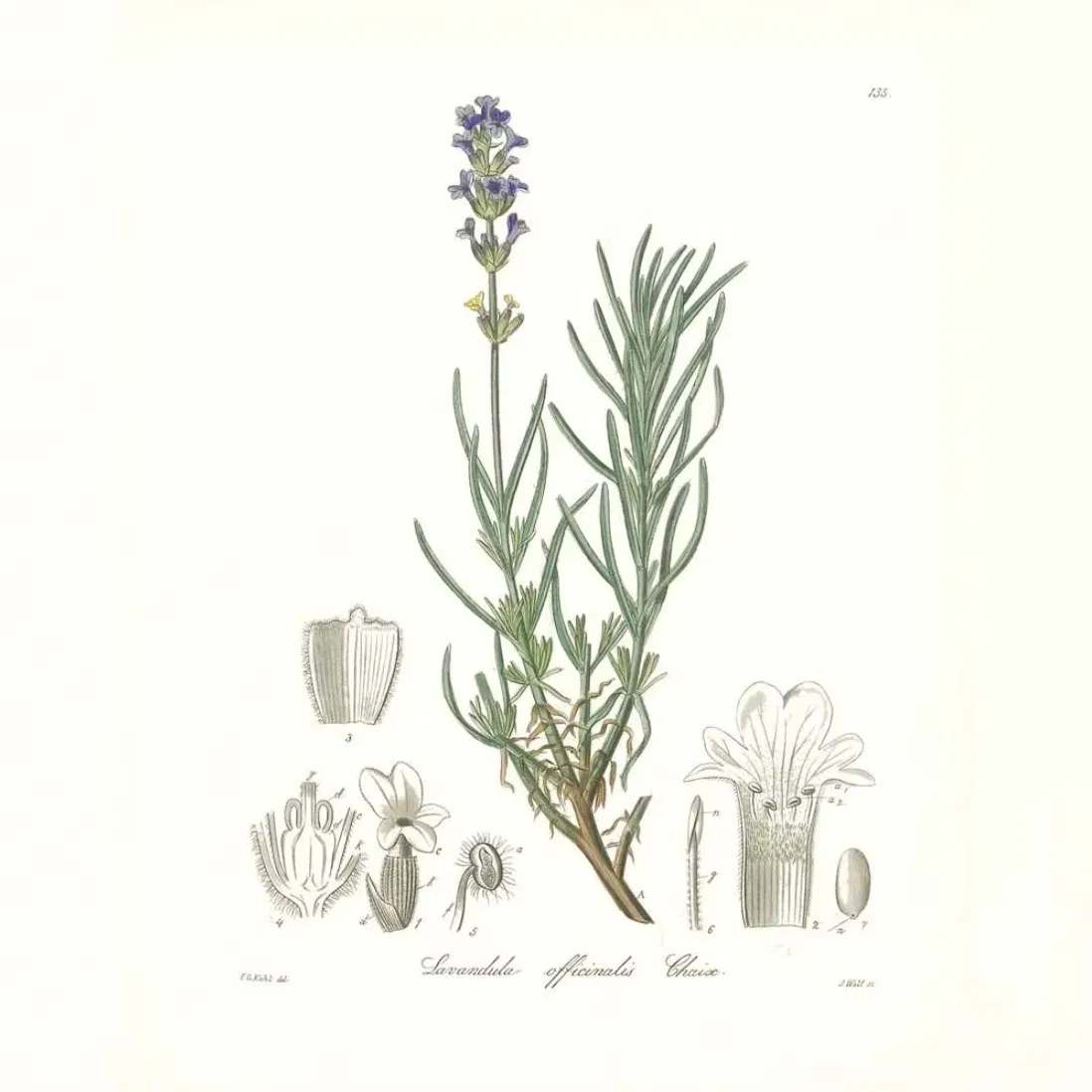
Binomial name: Lavandula augustifolia, lavandula vera, lavandula officinalis
Family: Lamiaceae
Producer organ: Flower
Origin: France (Lozère, Alpes de Haute-Provence, Drôme, Alpes Maritimes)
Production: Cultivated or wild, organic
Traditional, gentle, and magnificent, much studied and widely produced, a symbol of France in global aromatherapy, it makes our distillers proud...
It is one of the most versatile oils, probably the one you should have if you only have one. The Anglo-Saxons have a formula for that: When in doubt, use lavender!
It does a thousand and one things: healing, calming, anti-infectious, anti-inflammatory, and anti-spasmodic. It is not a specialist in anything, but it's good for (almost) everything!
In olfaction, those who have never smelled lavender are often surprised. This is because... in everyday products (hygiene, cleaning, food, etc...) what we refer to as lavender is actually lavandin, or more generally a synthetic reproduction of lavandin. Compared to this, lavender is much more... fine, gentler, and so much more subtle. Rich and complex, perfumers describe it as: herbal, floral, spicy, balsamic, aldehydic, fruity, woody, velvety... among others. We will see that according to the terroirs, altitudes, and distillers, there will be many differences.
This is also the case regarding whether it is cultivated or wild. According to specialists, cultivated lavender will be more embodied, more 'physical', while wild lavender will be more oriented towards the emotional sphere, more intimate and delicate. Again, this is very general, and it depends on many other factors. What is certain is that, unlike a cultivated plant, its wild cousin has had to rely solely on itself to grow, which will change its composition and 'gesture'.
We have selected for you the best of the best artisan distillers.